Nobody get all prescriptive versus descriptive linguistics on me, but I'm noting a bizarre thing lately. It may not be new, but there's this odd tendency for people to call decisions or acts that they disagree with that they think are clearly done to please somebody not them "politically correct."
There's a fair deal of politics in this post, but I swear it's about a pharmacy-related issue.
Political correctness, PC-ness or PC-ism is a term mostly associated with liberals and liberal thinking. The basic gist of PC-ness is the idea that you shouldn't offend people, but it extends beyond that; you shouldn't do things that might offend people. Furthermore, everything you do is potentially offensive to someone, no matter how mundane it seems to you. Taken to its extreme, PC-ness is "left-wing censorship." It is frequently assumed within the context of PC that white males are not really offended by anything, but that women, racial minorities, and religious minority groups are "sensitive" to "careless speech." Women in particular are used as an example, partly because some feminist groups really do go way too far, insisting that the word "human" is offensive because it contains the word "man" and that alternative terminology needs to be developed.
The idea of what is and is not offensive is highly affected by cultural and subcultural norms, so I'm not even going to go into that. You could write a book on the subject. I'm sure someone has.
What I'm going to take issue with is the use of the phrase PC being grossly misapplied and my understanding of why it happens. The most recent example of this that I've seen was when I, out of morbid curiosity, clicked a link to "saveCFCinhalers.org" (I'm not going to link them because I don't want to boost their google ranking).
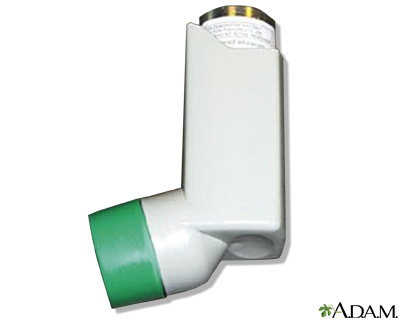
Summary: CFCs, or chlorofluorocarbons, are compounds that have been used as aerosol propellants and refrigerants for roughly the past century. CFCs react with ozone in the upper atmosphere and catalyze its destruction. Because CFCs are a catalyst, they are not used up in the reaction, so a single CFC molecule may destroy a number of ozone molecules, converting them to oxygen. Ozone blocks ultraviolet radiation, specifically UVB rays. It is well-established that CFCs deplete ozone and that this will increase the amount of UVB rays that reach the earth's surface. CFCs were phased out of aerosol paints and other products during the last decade. 2008 was the last year that CFCs could be included in metered-dose inhalers (MDIs, or "puffers").
MDIs containing a different, non-CFC propellant (HFA inhalers) have been on the market since 1996. As of December 31st, 2008, CFC inhalers may no longer be sold and supplies have basically been exhausted anyway since nobody has been making them for a while. The most commonly used MDIs are albuterol "rescue inhalers" that expand the passageways in the lungs. This is a big deal drug--if you want to know what it's like to have an asthma attack, go get a straw. Put it in your mouth. Breathe only through the straw without opening your mouth wider or using your nose.
Anyway, the old inhalers have been replaced with environmentally-friendly versions. Same drug, same dose, same efficacy. Some people are throwing a fit about this.
There are a few big complaints.
1. The HFA inhalers cost a little more. The old albuterol generic was about $25, less if insurance picked up part of the tab. The new inhalers are about $35-40 and insurance pays less since they're generally "brand name" products now. The whole insurance payment thing might change soon if enough people complain about it.
2. The HFA inhalers don't "feel" the same when sprayed--they're a bit less "forceful," which leads people to think that they don't work.
3. The propellant contains a very tiny amount of ethanol, which might leave a bad taste in the user's mouth. It is not enough to get you drunk by any stretch of the imagination.
The websites railing against HFA inhalers are full of comments that basically tell the same story. My inhaler doesn't work anymore. My daughter changed to an HFA inhaler and she died of an asthma attack a few months later. I changed to an HFA inhaler and now I have a huge long list of health problems I didn't have before. The government and the FDA are ripping us off and lying about the safety and efficacy of HFA inhalers. Here's a list of doctors that don't believe the HFA inhalers work as well. The American Lung Association is full of shit. Etc. I actually got into an "argument" of sorts with a coworker over this one day--not someone that works in the pharmacy. He was convinced that albuterol had been taken off the market completely and that you simply couldn't get it anymore, and when I informed him otherwise he seemed incredulous--but I didn't get an opportunity to talk to him about it further.
The comment that piqued my interest (and inspired this entry) was the complaint that CFCs had been removed from inhalers to "be politically correct."
I don't know exactly what train of thought the commentor used to get to that point, but here's how I see it. Before anyone accuses me of straw-manning anybody, I'm quoting statements made by my incensed coworker. While his thoughts may not be echoed by everyone who opposes this particular bit of regulation, this is the only dialogue I've had with someone who had a problem with the banning of CFCs on principle rather than because of some specific complaint (such as the new inhalers costing more).
1. Some people ("environmentalists") think that CFCs damage the ozone layer.
2. People who want to be "environmentally-friendly" by using CFC-free products should have the right to buy them; let the market decide.
3. I'm not convinced that CFCs damage the ozone layer.
4. Not letting me choose which product to buy is an unfair limitation of my personal freedom.
5. Therefore, a CFC ban limits my personal freedom.
This train of thought hinges on one particular premise, which, again, lest you think I'm constructing a straw man, was basically the crux of my coworker's entire argument: I'm not convinced that CFCs damage the ozone layer.
Let's go with the "free market" approach. In order to make an informed decision about which product is best, you have to understand several things. First, you have to know what the ozone layer is. Second, you have to know that CFCs damage the ozone layer. Third, you have to know the consequences of damaging the ozone layer. Once you have all of that information, you can make a choice: Do I care whether or not the ozone layer is damaged by the products that I use?
Here's the problem. This isn't a personal choice that's (primarily) going to affect only you, like what color to paint your shutters or whether or not to snort cocaine. Your decision is going to affect everyone living on the Earth for at least the next 50 years, which is how long an individual CFC molecule can remain in the atmosphere destroying ozone molecules. You are contributing to an increase in UVB radiation reaching the planet's surface during your lifetime, much of your children's lifetime, and at least part of their children's lifetime. You are increasing the risk of skin cancer for everyone alive now and everyone who will be born over the next several decades.
Frankly, I don't think you should be allowed to make that decision any more than you should be allowed to shoot me and take my wallet or dump sewage on my property, and the fact that you're too short-sighted to see the consequences of your actions shouldn't affect my personal health. I have rights too, you know.
(Incidentally, to preempt the slippery slope, I don't favor smoking bans because if second-hand smoke bothers you, don't go where people are smoking. If the owner of a particular piece of property opts to ban smoking for the comfort of their non-smoking patrons, that's their call, but nobody should be able to tell you you can't smoke outside or in your own car--though exposing your kids to second-hand smoke is certainly irresponsible and I have mixed feelings about it.)
What does any of this have to do with PC-ness?
Well, PC-ness is about not offending people. One of the things that I've heard said several times, more by conservatives than by liberals, is that "you don't have a right to never be offended," and I agree. Sometimes, people are going to do or say offensive things, and unless they're hurting you or there's a specific rule against whatever they're doing (sexual harassment at work, for example), you just have to get over it and move on. That doesn't mean you have to like it, and you can certainly say you don't like it, because criticism is not the same thing as censorship. Plus, some things are just socially unacceptable within a specific culture because enough people have decided that they don't like thing X that doing or saying thing X will get you publically ostracized (being openly racist in many circles in the US is a good example).
At this point, environmentalists become a minority group identified by a set of opinions or beliefs. If you don't accept the whole CFC-ozone layer thing, you might call it an "environmentalist belief," which puts it on par with any other faith-based assumption that you don't share. At that point, the government banning CFCs does seem like a "PC thing." They're doing it to appease some minority's feelings.
Which means that you're treating the CFC-ozone "belief" kind of like the beliefs of religious groups that are not your own. It's like if the government banned pork products because Muslims consider them unclean. You don't care what Muslims believe if you aren't one. Why should the "belief" of a minority group infringe upon the rights of the majority? Stupid political correctness!
This is why calling something PC in this context is just an empty smear--we're not talking about offending people here. We're talking about reducing the risk of skin cancer for human beings all over the world. There is a concrete reason for banning CFCs that has nothing to do with anyone's feelings. The EPA, NASA, National Weather Service and National Oceanic and Atmospheric Administration all concur. So do independent researchers at Manchester Metropolitan University in the UK and scientists from Germany, Belgium, Denmark, Norway, Spain, Switzerland, Finland, Canada, and Greece. Some very compelling evidence would be necessary to invalidate current theories.
Here's the part of all this that I don't entirely comprehend. Conservatives are generally very black-and-white--things are true, or they aren't. They pride themselves on being practical thinkers and denounce liberals as naïve idealists. The reason I think that this is funny is because calling evidence-based environmentally-friendly legislature "PC" is essentially invoking a kind of relativism. "You and I believe different things. Neither one of us can produce proof that will convince the other, so let's just agree to disagree." Except that you can't do that, because whether or not CFCs affect the ozone layer (for example) isn't a matter of opinion. It's either true or it isn't. And if we're talking about laws, something is either a law or it isn't; we have to decide. To "agree to disagree" in that context is to suggest shutting down dialogue on the subject--therefore, nothing is changed and the conservative viewpoint "wins" by default.
Inappropriate use of relativism regarding what is valid knowledge--which I see on both the far left and far right--is actually an interesting enough topic to warrant its own post, and I might have to make one later.
So. Here's the tl;dr summary: You can't criticize someone for being "PC" when what they're doing is not about avoiding offending people but about responding to objective, measurable conditions. This is true even if you think that the thing being done is intended to appeal to a "minority group" because you don't care about the issue at hand. Using the phrase PC doesn't make a damned bit of sense--but as with all language, you're free to use the phrase to mean whatever you want. You just shouldn't expect your listener to interpret what you're saying properly.
Wednesday, January 14, 2009

Monday, December 15, 2008
Thank You Michael Crichton
First, I would like to point out that whoever scheduled a total of ten different examinations over the course of a three-week period needs to be informed that cruel and unusual punishment is prohibited by the Bill of Rights. I suspect that by the end of this week I will have lost what little sanity I have left.
But that's not what I'm posting to say--complaining about examinations may be part of student life, but there are more entertaining remarks that I can make. So here are a couple funny highlights from recent work shifts.
A girl calling me for a refill on her oral contraceptive pills expressed sincere belief when I told her that we didn't have the item in stock and that it would not come in until Thursday. The particular product recently went generic and there are still a few holdovers (despite the fact that they're made by the same company), but either way supplies of the brand name are not as numerous as they once were on our shelves.
I believe her exact phrasing was "wow, you guys can run out of drugs?" No, silly me, let me go open up the extradimensional pharmaceutical holding chamber where we keep the infinite supply.
But why reference Michael Crichton?
Those of you who have seen the movie Jurassic Park may recall a particular scene in which the power is out and most of the main cast is sealed in one of the bunkers, hiding from the rampaging dinosaurs. Attempting to formulate a plan, game warden Robert Muldoon brings up "the lysine contingency," a totally ridiculous safeguard thereafter explained by Samuel L. Jackson's computer programmer character:
"The lysine contingency - it's intended to prevent the spread of the animals is case they ever got off the island. Dr. Wu inserted a gene that makes a single faulty enzyme in protein metabolism. The animals can't manufacture the amino acid lysine. Unless they're continually supplied with lysine by us, they'll slip into a coma and die."
Of course, this makes absolutely no sense. Lysine is an essential amino acid, meaning that it cannot be synthesized by the human body--it must be consumed in the diet. In fact, no animals "manufacture" lysine. And as it is common enough--contained in many plants and all meat products--the "lysine contingency" isn't much of a plan at all.
I mostly mention this because I had trouble refraining from laughing the other day when a woman was desperately searching for L-lysine supplements. I should've asked her if she needed it to keep her pet dinosaur alive.
But that's not what I'm posting to say--complaining about examinations may be part of student life, but there are more entertaining remarks that I can make. So here are a couple funny highlights from recent work shifts.
A girl calling me for a refill on her oral contraceptive pills expressed sincere belief when I told her that we didn't have the item in stock and that it would not come in until Thursday. The particular product recently went generic and there are still a few holdovers (despite the fact that they're made by the same company), but either way supplies of the brand name are not as numerous as they once were on our shelves.
I believe her exact phrasing was "wow, you guys can run out of drugs?" No, silly me, let me go open up the extradimensional pharmaceutical holding chamber where we keep the infinite supply.
But why reference Michael Crichton?
Those of you who have seen the movie Jurassic Park may recall a particular scene in which the power is out and most of the main cast is sealed in one of the bunkers, hiding from the rampaging dinosaurs. Attempting to formulate a plan, game warden Robert Muldoon brings up "the lysine contingency," a totally ridiculous safeguard thereafter explained by Samuel L. Jackson's computer programmer character:
"The lysine contingency - it's intended to prevent the spread of the animals is case they ever got off the island. Dr. Wu inserted a gene that makes a single faulty enzyme in protein metabolism. The animals can't manufacture the amino acid lysine. Unless they're continually supplied with lysine by us, they'll slip into a coma and die."
Of course, this makes absolutely no sense. Lysine is an essential amino acid, meaning that it cannot be synthesized by the human body--it must be consumed in the diet. In fact, no animals "manufacture" lysine. And as it is common enough--contained in many plants and all meat products--the "lysine contingency" isn't much of a plan at all.
I mostly mention this because I had trouble refraining from laughing the other day when a woman was desperately searching for L-lysine supplements. I should've asked her if she needed it to keep her pet dinosaur alive.
Thursday, November 27, 2008
Happy Thanksgiving!
It's been a busy few weeks around my small corner of the world, but there's no way I'd miss the opportunity to take two minutes to wish those of you in the blogosphere a happy Thanksgiving.
May you surround yourself with good company on the outside and fill yourself with excellent food on the inside!
May you surround yourself with good company on the outside and fill yourself with excellent food on the inside!
Friday, November 7, 2008
Stop RFK Jr.
Robert F. Kennedy, Jr. is on the current list of potential appointees for President-elect Obama's cabinet. While RFK Jr. has had a very successful political career, the positions for which he's being considered are the EPA or the Department of the Interior.
This cannot be permitted to happen. Why? Because he's a total crank when it comes to science. He believes the vaccine/autism link is plausible and has praised antivaccination movement leader Dan Olmsted--who has continually pushed junk science disproven years ago. He blamed Katrina on global warming (errr) and has opposed the building of wind turbines near Martha's Vineyard on because "it would damage the view" despite the project having support from many other environmentalists. He's got a track record of politicizing science to serve his own needs--and that's bad for reasons that should be obvious.
You can contact the Obama transition team and let them know how you feel about this. Not sure what to say? Consider Mark Hoofnagle's letter as an example:
RFK Jr. must NOT be appointed as head of the EPA. He is NOT a scientist. He does NOT understand science. He does NOT respect science. He is, in fact, a crank, who believes in pseudoscientific nonsense like vaccines causing autism. And when people are cranky and unscientific in one area of belief, it is never restricted to just that area. It reflects a fundamental misunderstanding of science and an incompetence in evaluating the quality of data and scientific information. This is not remotely a partisan letter, this is a plea for your administration not to make a horrible error.
This is a BAD choice. Do not do this or you will alienate scientists from your campaign very early on, not to mention doctors and especially pediatricians. This man is a crackpot, and I simply can not condone his presence anywhere in government.
This cannot be permitted to happen. Why? Because he's a total crank when it comes to science. He believes the vaccine/autism link is plausible and has praised antivaccination movement leader Dan Olmsted--who has continually pushed junk science disproven years ago. He blamed Katrina on global warming (errr) and has opposed the building of wind turbines near Martha's Vineyard on because "it would damage the view" despite the project having support from many other environmentalists. He's got a track record of politicizing science to serve his own needs--and that's bad for reasons that should be obvious.
You can contact the Obama transition team and let them know how you feel about this. Not sure what to say? Consider Mark Hoofnagle's letter as an example:
RFK Jr. must NOT be appointed as head of the EPA. He is NOT a scientist. He does NOT understand science. He does NOT respect science. He is, in fact, a crank, who believes in pseudoscientific nonsense like vaccines causing autism. And when people are cranky and unscientific in one area of belief, it is never restricted to just that area. It reflects a fundamental misunderstanding of science and an incompetence in evaluating the quality of data and scientific information. This is not remotely a partisan letter, this is a plea for your administration not to make a horrible error.
This is a BAD choice. Do not do this or you will alienate scientists from your campaign very early on, not to mention doctors and especially pediatricians. This man is a crackpot, and I simply can not condone his presence anywhere in government.
Wednesday, November 5, 2008
Congraturation!
Congratulations, Barack Obama, on becoming the 44th President of the United States in what will probably be remembered as one of the most significant elections of my generation. And I have no doubt that I will remember it despite all the champagne I consumed last night in celebration.
It's going to be a long road, but this is a step toward fixing a lot of the problems that have sprung up over the past decade.
It's going to be a long road, but this is a step toward fixing a lot of the problems that have sprung up over the past decade.
Tuesday, October 28, 2008
A Tenuous "Alli"ance
It appears that GlaxoSmithKline has recieved approval to market Alli overseas to our European cousins.
You hear that? An FDA-approved weight-loss supplement! It's a miracle!
Alli was actually released to US markets last summer as one of the more unusual Rx-to-OTC product conversions that we've seen recently. Popular once prescription-only Zyrtec I expected, but Alli was really out of left field. I actually meant to blog about Alli when it was released, but somehow it got away from me. Now I can do so to commemorate its release across the pond.
What is Alli? Alli contains the same active ingredient as a prescription drug that was developed by the Swiss company Roche Pharmaceuticals--the generic name for it is orlistat. It is the first over-the-counter drug approved as a weight loss aid by the FDA, mostly because there's good clinical data that it's actually effective when used properly.
OTC "diet pills" generally contain high doses of stimulants/caffeine, claim to suppress appetite, or somehow purport to "melt fat" or "block calories." Some stimulant weight-loss supplements contain as much caffeine per capsule as three cups of coffee and have "serving sizes" of two or three caps at a time! Clever wording is usually employed to conceal the simplistic nature of these products--Zantrex-3 refers to its caffeine content as "a proprietary xanthine-based stimulant." Caffeine is part of a chemical family called methylxanthines. Other times numerous herbal ingredients or Latin names for botanicals obscure the true content of the supplements except to the most attentive consumers.
Alli, true to its claims, is different. How does it work?
First, a bit of basic biochemistry. There are three major "macronutrients" required for human nutrition--carbohydrates (sugars), lipids (fats), and proteins. All of these are absorbed through the intestine whenever you eat. Macronutrients are then delivered to the liver or various cells of the body that can use them. Carbohydrates are easy; the body breaks them down into smaller units and uses them to produce ATP, a small molecule that is the primary source of energy for the body at the cellular level.
Proteins and fats cannot be used directly by most cells. Instead, the liver processes them into more readily useful forms. Some proteins can be converted into glucose, the most basic (and preferred) form of fuel for body systems, especially neurons. Fat metabolism is more complicated and involves many steps that ultimately culminate in the release of free fatty acids; these are also usable as fuel by many body systems.
If you eat too much of anything, be it proteins, carbohydrates, or fats, the body is remarkably efficient at storing the excess energy produced. The most energy-dense form of stored energy is fat; fats produce the most energy (in calories) per gram. This fat winds up getting stored throughout the body as a reserve for times when food sources are scarce. Each pound of fat on your body represents a total stored reserve of 3,500 calories. Yum!
I've heard it mistakenly stated that you "can't get fat" eating a high-protein diet because "carbs make you fat" or, more obviously, "fat makes you fat," but this is completely false. Your body can (and will) make fat out of anything the liver can get its...um...lobes on.
What does this have to do with Alli?
Alli is not actually absorbed into the bloodstream. Instead, it floats around in the intestines and binds to fat molecules, preventing those from being absorbed. If your body doesn't absorb the fat molecules, it can't process them--in a sense, it's like you never ate them in the first place. Alli binds an average of 25% of consumed dietary fats, potentially reducing caloric intake from a fatty meal significantly.
Problem: Alli is not magic. It cannot break the laws of physics and destroy matter (and I suspect converting fats to energy in your intestine would have odd effects, were it possible). If you don't absorb the fats, they still have to go somewhere. Since they're already 3/4 of the way through your digestive tract, and getting the whole system to flow in reverse is both very unpleasant and very difficult, I'll let you think about it on your own for a second.
A funny aside: The makers of Alli recommend that you not wear light-colored pants while taking it.
I personally like to think of Alli as "negative reinforcement." Operant conditioning is basic psychology. Continuously eat fatty meals on Alli and you're going to suffer chronically oily stools. You're either going to learn to control your dietary fat intake or you're going to throw away your Alli.
This isn't to say that Alli is bad. As part of a comprehensive diet and exercise plan, it will help you lose more weight, even if it's only a few extra pounds. But the reason Alli can get FDA approval, aside from the fact that it's been subjected to more rigorous clinical trials, is that Alli doesn't claim to be magic. "Eat all you want and still lose weight!" "Melt fat away while you sleep!" Due to loose regulations, dietary supplement manufacturers make these kinds of claims all the time. But the makers of Alli had to be realistic about the potential benefits of their drug to get it approved. This isn't a bad thing. It's what we should expect from all drug and supplement manufacturers--indeed, it's what should be legally required.
Anyway. Now Europeans can experience the thrill of Alli without a doctor's prescription!
...just remember to wear dark pants.
This means the product will now be proposed for final approval by the European Commission and marketing authorisation could be granted in the coming months. On licence grant, orlistat 60 mg would be the first licensed weight loss aid available without prescription throughout Europe.
You hear that? An FDA-approved weight-loss supplement! It's a miracle!
Alli was actually released to US markets last summer as one of the more unusual Rx-to-OTC product conversions that we've seen recently. Popular once prescription-only Zyrtec I expected, but Alli was really out of left field. I actually meant to blog about Alli when it was released, but somehow it got away from me. Now I can do so to commemorate its release across the pond.
What is Alli? Alli contains the same active ingredient as a prescription drug that was developed by the Swiss company Roche Pharmaceuticals--the generic name for it is orlistat. It is the first over-the-counter drug approved as a weight loss aid by the FDA, mostly because there's good clinical data that it's actually effective when used properly.
OTC "diet pills" generally contain high doses of stimulants/caffeine, claim to suppress appetite, or somehow purport to "melt fat" or "block calories." Some stimulant weight-loss supplements contain as much caffeine per capsule as three cups of coffee and have "serving sizes" of two or three caps at a time! Clever wording is usually employed to conceal the simplistic nature of these products--Zantrex-3 refers to its caffeine content as "a proprietary xanthine-based stimulant." Caffeine is part of a chemical family called methylxanthines. Other times numerous herbal ingredients or Latin names for botanicals obscure the true content of the supplements except to the most attentive consumers.
Alli, true to its claims, is different. How does it work?
First, a bit of basic biochemistry. There are three major "macronutrients" required for human nutrition--carbohydrates (sugars), lipids (fats), and proteins. All of these are absorbed through the intestine whenever you eat. Macronutrients are then delivered to the liver or various cells of the body that can use them. Carbohydrates are easy; the body breaks them down into smaller units and uses them to produce ATP, a small molecule that is the primary source of energy for the body at the cellular level.
Proteins and fats cannot be used directly by most cells. Instead, the liver processes them into more readily useful forms. Some proteins can be converted into glucose, the most basic (and preferred) form of fuel for body systems, especially neurons. Fat metabolism is more complicated and involves many steps that ultimately culminate in the release of free fatty acids; these are also usable as fuel by many body systems.
If you eat too much of anything, be it proteins, carbohydrates, or fats, the body is remarkably efficient at storing the excess energy produced. The most energy-dense form of stored energy is fat; fats produce the most energy (in calories) per gram. This fat winds up getting stored throughout the body as a reserve for times when food sources are scarce. Each pound of fat on your body represents a total stored reserve of 3,500 calories. Yum!
I've heard it mistakenly stated that you "can't get fat" eating a high-protein diet because "carbs make you fat" or, more obviously, "fat makes you fat," but this is completely false. Your body can (and will) make fat out of anything the liver can get its...um...lobes on.
What does this have to do with Alli?
Alli is not actually absorbed into the bloodstream. Instead, it floats around in the intestines and binds to fat molecules, preventing those from being absorbed. If your body doesn't absorb the fat molecules, it can't process them--in a sense, it's like you never ate them in the first place. Alli binds an average of 25% of consumed dietary fats, potentially reducing caloric intake from a fatty meal significantly.
Problem: Alli is not magic. It cannot break the laws of physics and destroy matter (and I suspect converting fats to energy in your intestine would have odd effects, were it possible). If you don't absorb the fats, they still have to go somewhere. Since they're already 3/4 of the way through your digestive tract, and getting the whole system to flow in reverse is both very unpleasant and very difficult, I'll let you think about it on your own for a second.
A funny aside: The makers of Alli recommend that you not wear light-colored pants while taking it.
I personally like to think of Alli as "negative reinforcement." Operant conditioning is basic psychology. Continuously eat fatty meals on Alli and you're going to suffer chronically oily stools. You're either going to learn to control your dietary fat intake or you're going to throw away your Alli.
This isn't to say that Alli is bad. As part of a comprehensive diet and exercise plan, it will help you lose more weight, even if it's only a few extra pounds. But the reason Alli can get FDA approval, aside from the fact that it's been subjected to more rigorous clinical trials, is that Alli doesn't claim to be magic. "Eat all you want and still lose weight!" "Melt fat away while you sleep!" Due to loose regulations, dietary supplement manufacturers make these kinds of claims all the time. But the makers of Alli had to be realistic about the potential benefits of their drug to get it approved. This isn't a bad thing. It's what we should expect from all drug and supplement manufacturers--indeed, it's what should be legally required.
Anyway. Now Europeans can experience the thrill of Alli without a doctor's prescription!
...just remember to wear dark pants.
Monday, October 27, 2008
Tagged, I'm "It"
It would appear that I have been tagged with some infectious, self-propagating idea by Abel Pharmboy.
Well, I've only got five exams this week. Why not take a few minutes to answer some simple questions?
Here are the rules for the game.
1. Link to the person who tagged you.
2. Post the rules on your blog.
3. Write six random things about yourself.
4. Tag six people at the end of your post and link to them.
5. Let each person know they've been tagged and leave a comment on their blog.
6. Let the tagger know when your entry is up.
One and two are done. Six random things? You'll have to settle for six pseudorandom things since I don't feel like making a list of personal traits with more than six elements and generating random numbers to determine which things to include. Yes, settle for pseudorandomness. Settle...and suffer!
1. If you ever need to bribe me with something, I suggest a Japanese dinner. I can't get enough salmon sushi, ever, and will continue to eat the stuff until I explode. Please stop me before then so that the restaurant staff doesn't have to clean up N.B. bits.
2. My university was not my first choice school; my actual first choice was Duke University, which, in retrospect, would've been a terrible idea. Duke has no pharmacy program, so I would've needed to transfer after two years. My reasons for wanting attend Duke despite its lack of a pharmacy program? Like so many other messes guys get into, it was because of a girl. Not the most rational motivation.
3. Over the past four years I have transformed from passionately foofy-doctrineless liberal Christian to skeptic and atheist. My conversion to skepticism is actually a result of my studies of alternative medicine. I was first exposed to altmed two years ago when I inadvertently wound up at the Quackwatch website while doing a research project. Thorough investigation of the subject really improved me as a scientist; I would say that before poking into the innards of altmed that I wasn't thinking like a scientist.
Of course, skepticism in medicine led to me applying skepticism to other areas, and when I was exposed to atheism as "skepticism of religious claims" instead of "disbelief in god--as much a matter of faith as any religion" it hit me that there was no other choice than to turn the skeptical eye in the direction of my religious beliefs. They were predictably destroyed once suitably scrutinized.
4. I own a cat. True to family tradition, I didn't get the cat at a pet store, nor did I adopt her from an animal shelter; I simply picked her up off the street as a kitten (roughly 6-8 months old, by the vet's estimation). After pulling onto my street and nearly hitting the poor thing with my car I stepped out of the driver's side door and there was a tuxedo-print cat mewing at me. I did what any soft-hearted but clueless animal-lover would do and took her inside for a saucer of milk (and, when that seemed insufficient, a can of solid white albacore tuna)--all this despite the fact that my lease specifically prohibited pets. I spent the next two hours thinking "what do I do with this animal now?" until I picked my girlfriend up from the airport and informed her that we needed to stop for cat food. She'd owned cats; I hadn't.
5. I used to live in Dayton, Ohio, the so-called "birthplace of aviation" as it is home to the Wright Brothers.
6. I was a Boy Scout as a teen, but I never achieved a rank higher than First Class. I was the first member of my troop to earn a climbing merit badge; I didn't care about promotions or decorations, I just wanted to go camping. I still can't reliably tie any knots.
Tag six, you're it! Go to!
Cobalt at Secher Nbiw
James McGrath at Exploring Our Matrix
Bad of the Bad Idea Blog
The Bronze Dog of The Bronze Blog
Dana of En Tequila es Verdad
and Greta Christina of the aptly-named Greta Christina's Blog!
Well, I've only got five exams this week. Why not take a few minutes to answer some simple questions?
Here are the rules for the game.
1. Link to the person who tagged you.
2. Post the rules on your blog.
3. Write six random things about yourself.
4. Tag six people at the end of your post and link to them.
5. Let each person know they've been tagged and leave a comment on their blog.
6. Let the tagger know when your entry is up.
One and two are done. Six random things? You'll have to settle for six pseudorandom things since I don't feel like making a list of personal traits with more than six elements and generating random numbers to determine which things to include. Yes, settle for pseudorandomness. Settle...and suffer!
1. If you ever need to bribe me with something, I suggest a Japanese dinner. I can't get enough salmon sushi, ever, and will continue to eat the stuff until I explode. Please stop me before then so that the restaurant staff doesn't have to clean up N.B. bits.
2. My university was not my first choice school; my actual first choice was Duke University, which, in retrospect, would've been a terrible idea. Duke has no pharmacy program, so I would've needed to transfer after two years. My reasons for wanting attend Duke despite its lack of a pharmacy program? Like so many other messes guys get into, it was because of a girl. Not the most rational motivation.
3. Over the past four years I have transformed from passionately foofy-doctrineless liberal Christian to skeptic and atheist. My conversion to skepticism is actually a result of my studies of alternative medicine. I was first exposed to altmed two years ago when I inadvertently wound up at the Quackwatch website while doing a research project. Thorough investigation of the subject really improved me as a scientist; I would say that before poking into the innards of altmed that I wasn't thinking like a scientist.
Of course, skepticism in medicine led to me applying skepticism to other areas, and when I was exposed to atheism as "skepticism of religious claims" instead of "disbelief in god--as much a matter of faith as any religion" it hit me that there was no other choice than to turn the skeptical eye in the direction of my religious beliefs. They were predictably destroyed once suitably scrutinized.
4. I own a cat. True to family tradition, I didn't get the cat at a pet store, nor did I adopt her from an animal shelter; I simply picked her up off the street as a kitten (roughly 6-8 months old, by the vet's estimation). After pulling onto my street and nearly hitting the poor thing with my car I stepped out of the driver's side door and there was a tuxedo-print cat mewing at me. I did what any soft-hearted but clueless animal-lover would do and took her inside for a saucer of milk (and, when that seemed insufficient, a can of solid white albacore tuna)--all this despite the fact that my lease specifically prohibited pets. I spent the next two hours thinking "what do I do with this animal now?" until I picked my girlfriend up from the airport and informed her that we needed to stop for cat food. She'd owned cats; I hadn't.
5. I used to live in Dayton, Ohio, the so-called "birthplace of aviation" as it is home to the Wright Brothers.
6. I was a Boy Scout as a teen, but I never achieved a rank higher than First Class. I was the first member of my troop to earn a climbing merit badge; I didn't care about promotions or decorations, I just wanted to go camping. I still can't reliably tie any knots.
Tag six, you're it! Go to!
Cobalt at Secher Nbiw
James McGrath at Exploring Our Matrix
Bad of the Bad Idea Blog
The Bronze Dog of The Bronze Blog
Dana of En Tequila es Verdad
and Greta Christina of the aptly-named Greta Christina's Blog!
Subscribe to:
Posts (Atom)